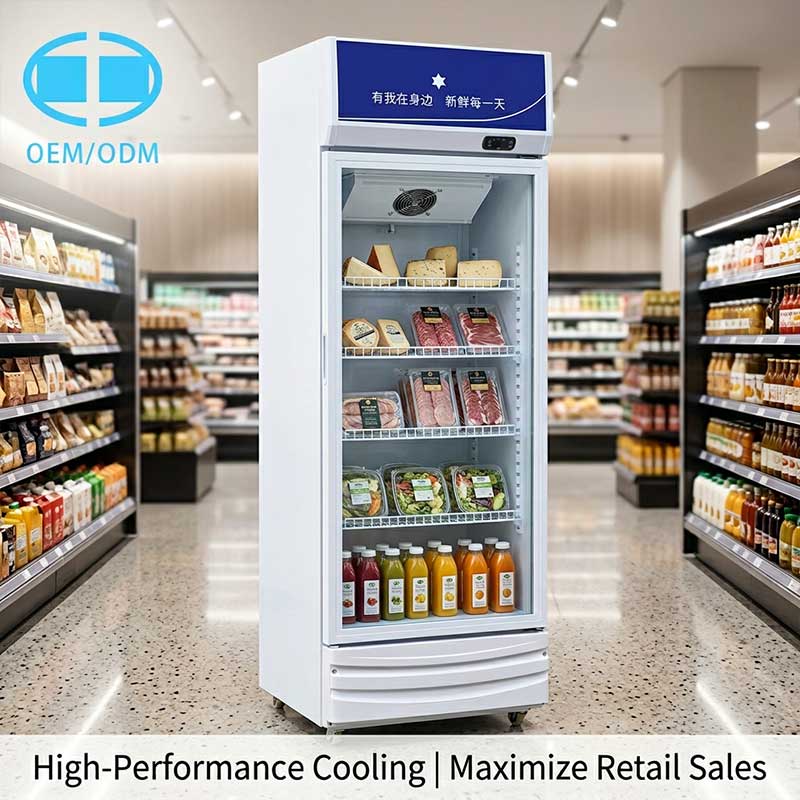
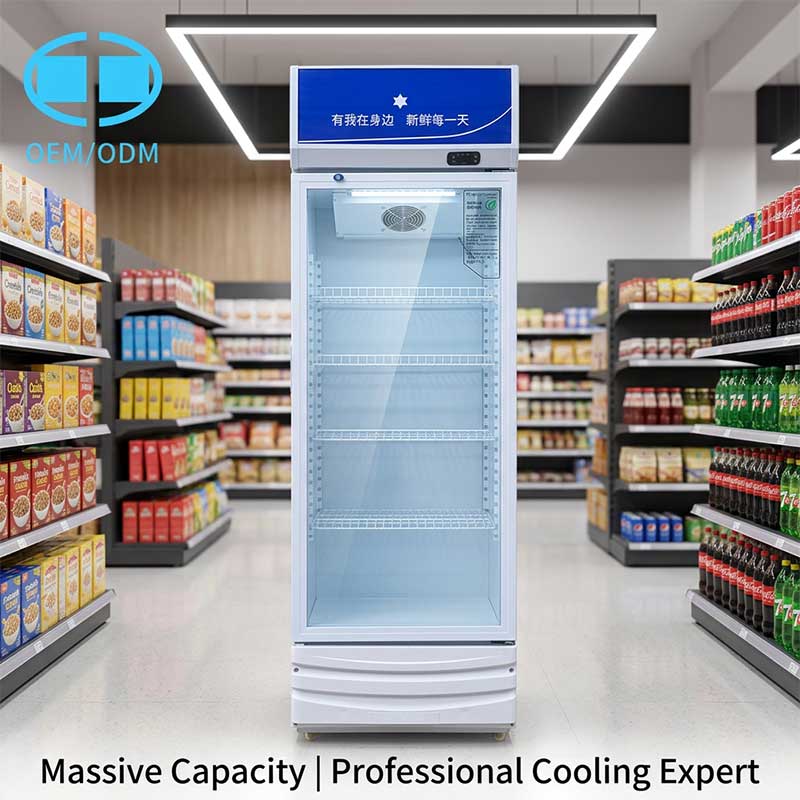
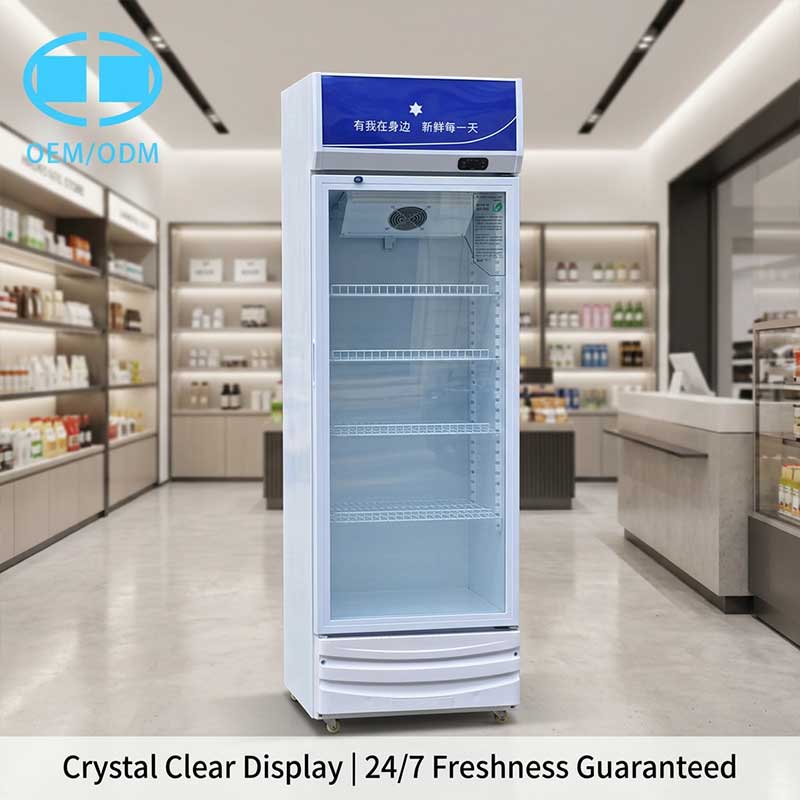
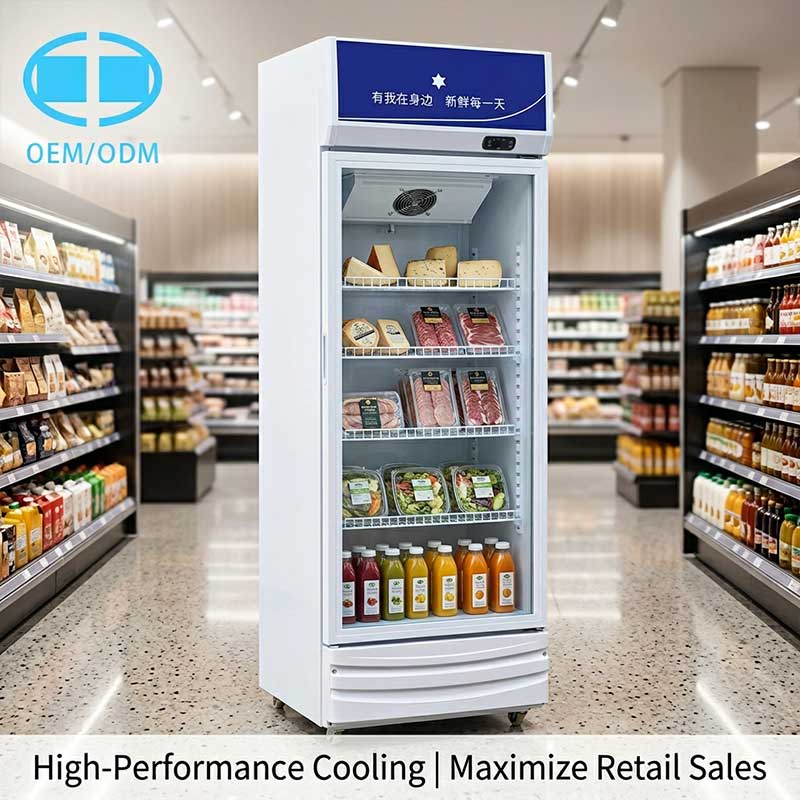
Single-door refrigerated display cabinet (388L) – Combined direct cooling and air cooling systems

English: A professional 388L display refrigerator featuring a high-efficiency top-mounted compressor (Dongbei/Wansheng). With a cooling range of 2°C to 8°C and options for mechanical or microcomputer control, it is the perfect solution for showcasing beverages and chilled goods.

Any questions or concerns?

Regarding product or factory information

English Version

This Standard Single-Door Refrigerated Cabinet is engineered for commercial excellence, blending robust cooling technology with a sleek presentation.

Key Features:

  • Premium Compressor: Equipped with Dongbei or Wansheng compressors, known for their reliability, energy efficiency, and long service life.

  • Versatile Cooling Modes: Available in Direct Cooling, Hybrid Airflow, or Forced-Air Cooling to maintain the perfect environment for various products.

  • Dual Control Options: Choose between a traditional Mechanical Knob or a precision Microcomputer Controller to keep temperatures steady between 2°C and 8°C.

  • Efficient Design: Offers a spacious 388L capacity with a compact 600mm footprint, maximizing display area in limited floor space.

Technical Specifications:

  • Product Dimensions: 600 × 600 × 1920 mm

  • Power Rating: 140W / 165W / 220W

  • Refrigerant: Eco-friendly 290a

  • Voltage/Frequency: 220V / 50HZ

其他信息

重量 47 公斤
尺寸 600 × 600 × 1920 厘米
Certification

, , ,

Compressor brand

Cooling type

Control type

Door type

Power rating

, ,

Refrigerant type

Refrigeration function

Refrigeration temperature range

volume

Voltage/Frequency

Commercial Refrigerator FAQ | Troubleshooting & Solutions

❄️ Commercial Freezer & Refrigerator FAQ

Common issues, expert troubleshooting, and practical solutions — keep your equipment running at peak performance.

🔧
Unit not cooling / poor temperature performance

Possible causes & solutions:

  • Power & connection – Verify plug is secure and circuit breaker is ON. Check if interior light works.
  • Condenser coils dirty – Clean coils (rear or bottom) every 3–6 months using a soft brush or vacuum.
  • Thermostat setting – Ensure setpoint is correct (e.g., 2~10℃ for chillers / -18℃ for freezers).
  • Overloaded unit – Avoid blocking air vents; leave space between items for airflow.
PRO TIP: Allow 24h after restocking for temperature to stabilize.
💧
Excessive frost or ice buildup

Why it happens & how to fix:

  • Door left open or door seal damaged – Inspect gasket for cracks/warping. Clean with warm water and test seal with paper sheet.
  • Frequent door openings – Train staff to minimise opening time, especially in humid conditions.
  • Defrost system failure – For fan‑cooled units, check defrost timer/heater. Manual defrost may be needed.
  • Improper temperature setting – Set to recommended level; too low increases frost formation.
⚠️ For heavy ice: turn off unit, remove products and allow natural thaw, then clean interior.
🔊
Unusual noise (loud hum, rattling, clicking)

Diagnose and resolve:

  • Leveling & contact – Ensure unit stands on even floor; adjust levelling feet. Avoid contact with walls or cabinets.
  • Loose components or fan blades – Check evaporator/condenser fan for debris or bent blades. Tighten mounting screws.
  • Compressor vibration – Verify compressor grommets are intact. Persistent heavy noise might indicate compressor wear.
  • Clicking sound – Could be start relay or overload protector. Contact service if repetitive clicking continues.
🎧 Normal sounds: refrigerant flow (slight bubbling) and occasional compressor hum are typical.
💨
Unit runs constantly / high energy consumption

Energy efficiency fixes:

  • Condenser coil maintenance – Dusty coils force compressor to work longer. Clean coils thoroughly.
  • Poor door sealing – Replace worn gasket; perform a dollar bill test (should not slide out easily).
  • Ambient temperature too high – Place unit away from heat sources (ovens, direct sunlight). Ensure adequate ventilation space.
  • Overstocking warm items – Cool products before placing inside. Allow airflow around the thermostat sensor.
📉 Save up to 15% energy by cleaning condenser coils monthly in heavy-use areas.
💦
Water leaking inside or on the floor

Stop water accumulation:

  • Clogged defrost drain line – Clean drain pan and use a pipe cleaner or hot water to flush the drain tube.
  • Door not closing properly – Adjust door alignment and clean gasket to avoid condensation overflow.
  • Frequent door opening in humidity – Install air curtains or reduce opening time; check that door closes tightly.
  • Cracked drain pan or misaligned tubing – Inspect pan for damage; replace if necessary.
🧼 Regularly clear drain hole with mild soap solution to prevent algae buildup.
🌡️
Temperature is inconsistent (warm spots or freezing food)

Stabilize internal climate:

  • Blocked air vents – Do not overpack. Rearrange products to allow even cold air circulation (especially in fan‑cooled units).
  • Faulty door gasket – Warm air infiltration creates zones. Replace gasket if cracked or brittle.
  • Sensor or thermostat malfunction – Test with external thermometer. Calibrate or replace sensor if deviation exceeds ±3°C.
  • Direct cooling units (static) – Avoid placing temperature-sensitive items directly against evaporator plate.
📏 Use a digital min/max thermometer to monitor overnight performance.
🧊
Ice maker / display not working (optional feature)

Troubleshoot ice production and lighting:

  • Check water supply line (ice maker models) – Ensure valve is open and line is not frozen. Replace filter if blocked.
  • LED interior light off – Check bulb or LED driver; simple replacement often solves. Ensure door switch is functional.
  • Digital display error code – Refer to manual. Power cycle (unplug 3 min) may reset temporary glitches.
  • Temperature too low for ice maker – Adjust freezer section temp to -12°C ~ -15°C for optimal ice production.
🔌 Keep spare lamps and door switches for quick service replacement.
⚙️
Compressor runs but no cooling / hot to touch

Critical checks for refrigeration circuit:

  • Refrigerant leak (R290/R600a systems) – If pipes have frost only at entry, suspect leak. Call certified technician for repair.
  • Start relay or overload failure – Intermittent cooling? Test relay with multimeter; replacement is affordable.
  • Condenser fan not running – Fan motor failure leads to compressor overheating. Replace fan motor immediately.
  • Blocked capillary tube – Usually requires professional service to clear or replace.
🚨 Never attempt to repair refrigerant circuit yourself — always use EPA/qualified technician.

Get a Free Quote

Tell us your requirements — our team responds within 24 hours

🏭 Factory Direct

📋 CE / ISO 9001

🌍 Export Ready

🔐 Your information is safe. No spam, ever.