
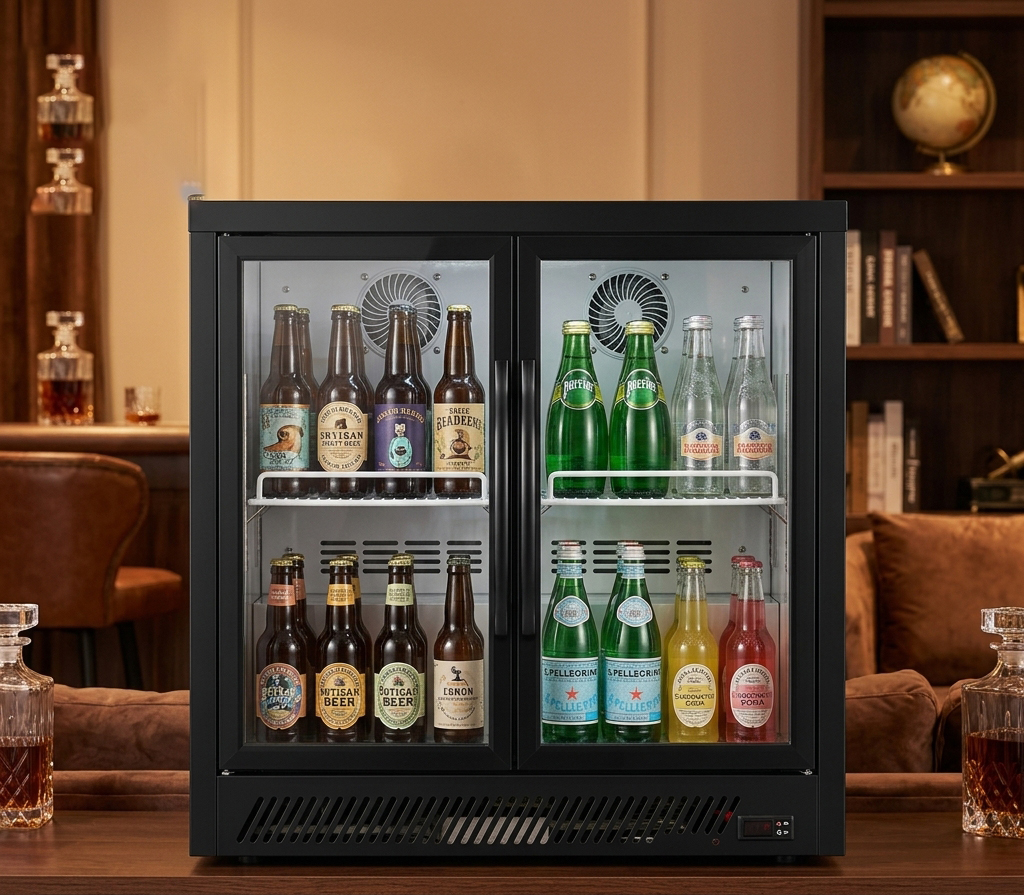
Subtitle: A Perfect Partner for Preserving and Displaying Wine at Home
Overview: Home wine cabinets are specialized refrigeration equipment designed for wine storage and display. Suitable for wine lovers and families, they not only keep wine in optimal condition but also serve as a decorative piece. This blog introduces its core structure, working principle and characteristics, within 500 words.
Key Structure of Home Wine Cabinets
Its main structure includes five core parts: cabinet body, refrigeration system, temperature and humidity control system, wine racks and door seal. The cabinet body is made of heat-insulating and anti-ultraviolet materials to avoid wine deterioration. The refrigeration system (compressor, evaporator) provides stable low temperature. The temperature and humidity control system is the core, and the layered wine racks are designed to fit different wine bottles.
Working Principle
1. Temperature Control: The compressor compresses the refrigerant to generate low-temperature cold air, which is sent into the cabinet by a small fan, maintaining a stable temperature (usually 5-18℃, adjustable according to wine types).
2. Humidity Regulation: The built-in humidifier or moisture-retaining device keeps the internal humidity at 60%-80%, preventing wine corks from drying and air from entering the bottles.
3. Preservation & Display: The anti-ultraviolet glass door blocks harmful light, while the quiet operation avoids vibration that affects wine quality. Layered wine racks allow orderly display and easy access.
With precise temperature and humidity control, it preserves the flavor of wine and adds a touch of elegance to home decoration, being a must-have for wine enthusiasts.