
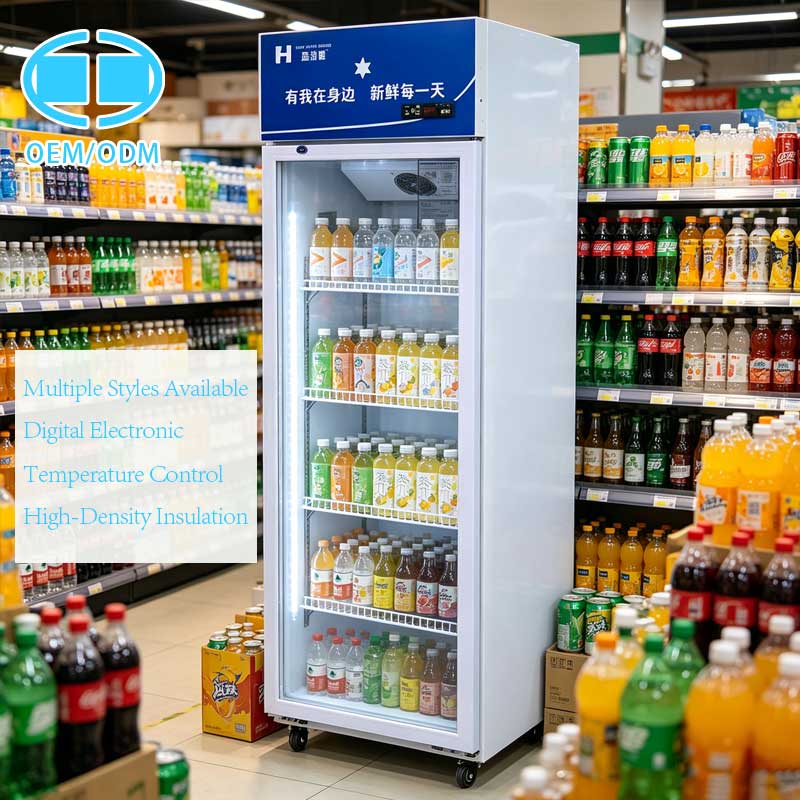
Subtitle: Choose the Right Cooling System for Your Daily Needs
Overview: Upright refrigerators are essential appliances in modern homes, with two main cooling systems: frost-free (fan-cooled) and direct cooling. This blog explains their core differences, unique functions, advantages, and practical usage tips to help you use your upright refrigerator more efficiently and choose the right one.
1. Core Differences Between Frost-Free and Direct Cooling
The key distinction lies in their cooling principles and structures, which directly affect user experience and food preservation
Frost-Free (Fan-Cooled): It cools by blowing cold air generated by the evaporator to all parts of the refrigerator through a built-in fan, forming forced air circulation. The frost forms on the hidden evaporator and is automatically removed by the defrosting system, so it is also called a “frost-free refrigerator”[3][6].
Direct Cooling: It relies on cooling pipes attached to the inner wall of the refrigerator to conduct cold air directly, and the temperature drops through natural air convection. Water vapor in the air is easy to condense into frost on the inner wall, so it is also known as a “frosty refrigerator”[3][6].
2. Functions and Benefits of Each Cooling Type

Both types have their own advantages, suitable for different usage scenarios.
Frost-Free Advantages: No manual defrosting, saving time and effort; uniform cooling, no temperature dead corners; faster cooling speed, keeping food fresh evenly; the interior is dry, and food is not easy to stick together[6]. It is suitable for families with frequent refrigerator use and large storage needs.
Direct Cooling Advantages: Simple structure, low failure rate and maintenance cost; high humidity inside, good for preserving fruits and vegetables, reducing water loss; lower power consumption, more energy-saving; quiet operation, no noise from fans[3][6]. It is suitable for small families, renters or those who pursue cost-effectiveness.